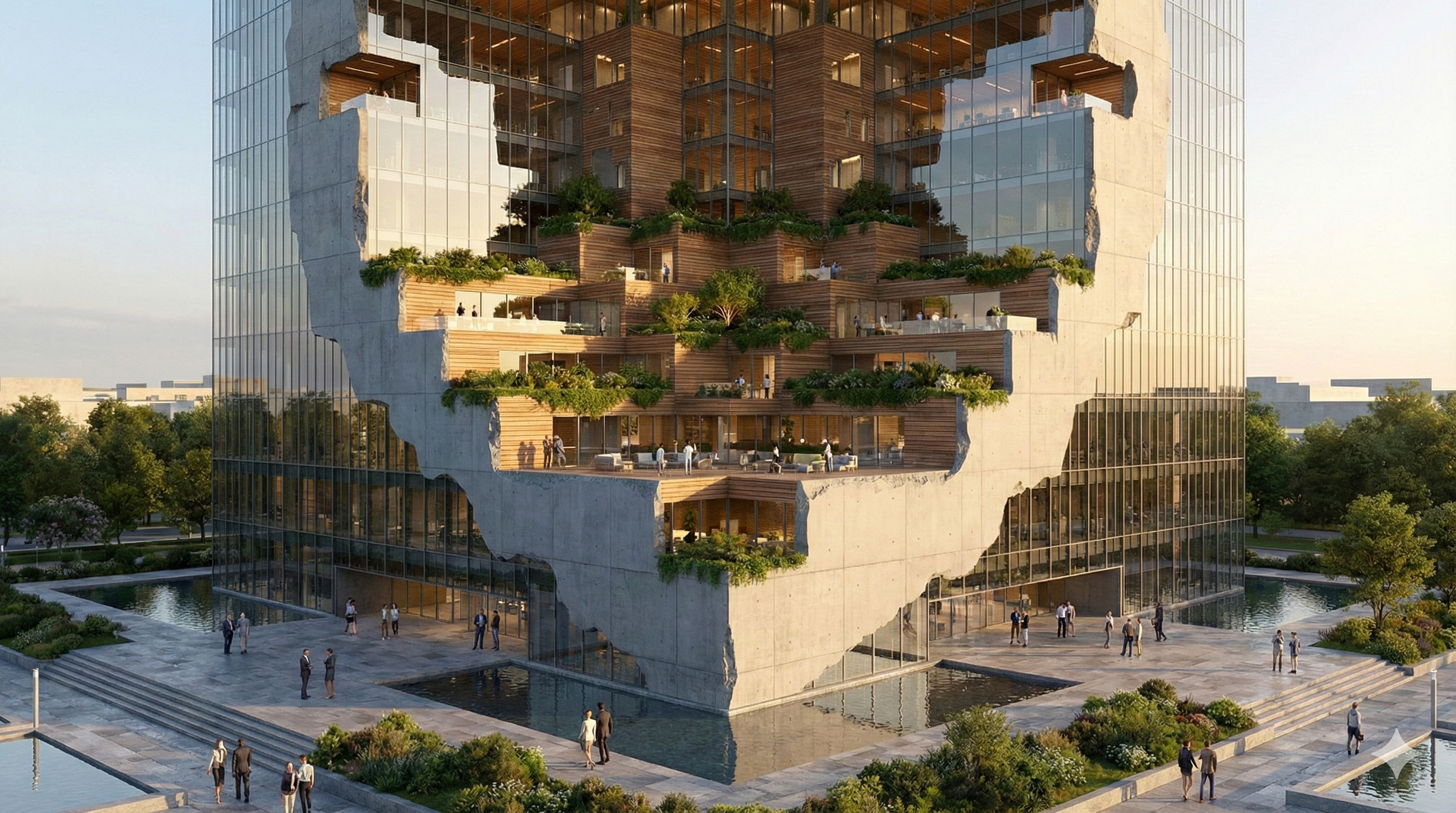
Eroded Monolith challenges the traditional typology of the skyscraper. Usually, high-rise buildings are sealed, air-conditioned glass boxes that isolate people from the elements. This project asks: What happens if we “break” the box to let nature in?
The concept creates a dialogue between two opposing forces: the perfection of the modernist grid versus the imperfection of organic erosion.
The Logic: Algorithmic Subtraction
The form-finding process was driven by a script written in Julia. Unlike the additive process used in Jenga Village (stacking blocks), this project uses a subtractive method.
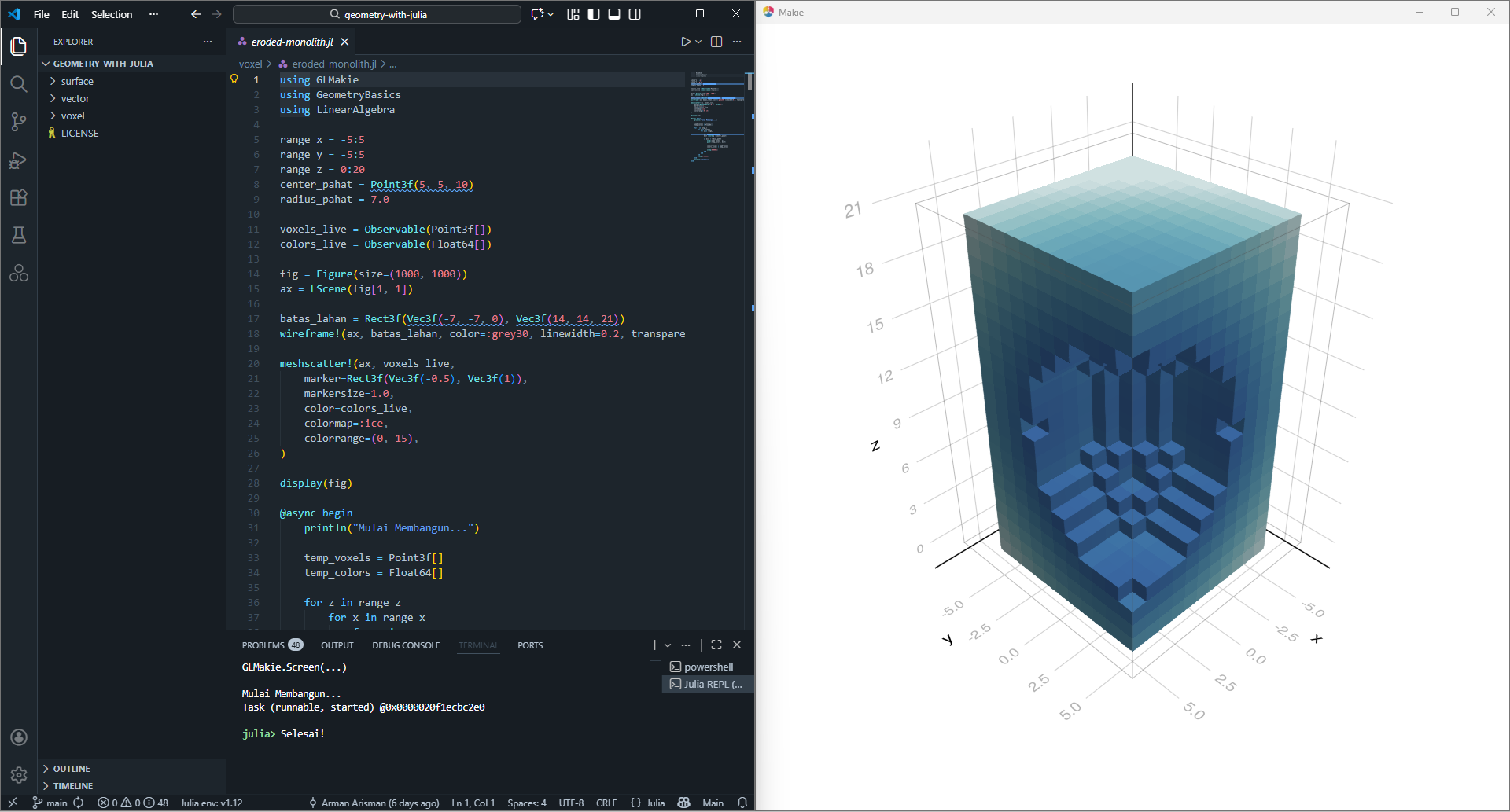
I started with a solid, massive volume—a “monolith.” Then, using a customized noise algorithm, the script identified specific voxels to be removed. Think of it like a digital termite colony carving out a nest, or water eroding a canyon over centuries. The code allowed me to control the intensity of the erosion, ensuring the structural core remained intact while opening up deep cavernous spaces on the façade.
Visualization: The Warmth Within
Rendered with Nano Banana, the visualization highlights the stark contrast in materiality.
- The Shell: The exterior is sleek, reflective glass—representative of the corporate world.
- The Core: The eroded interior is clad in warm timber and filled with hanging gardens.
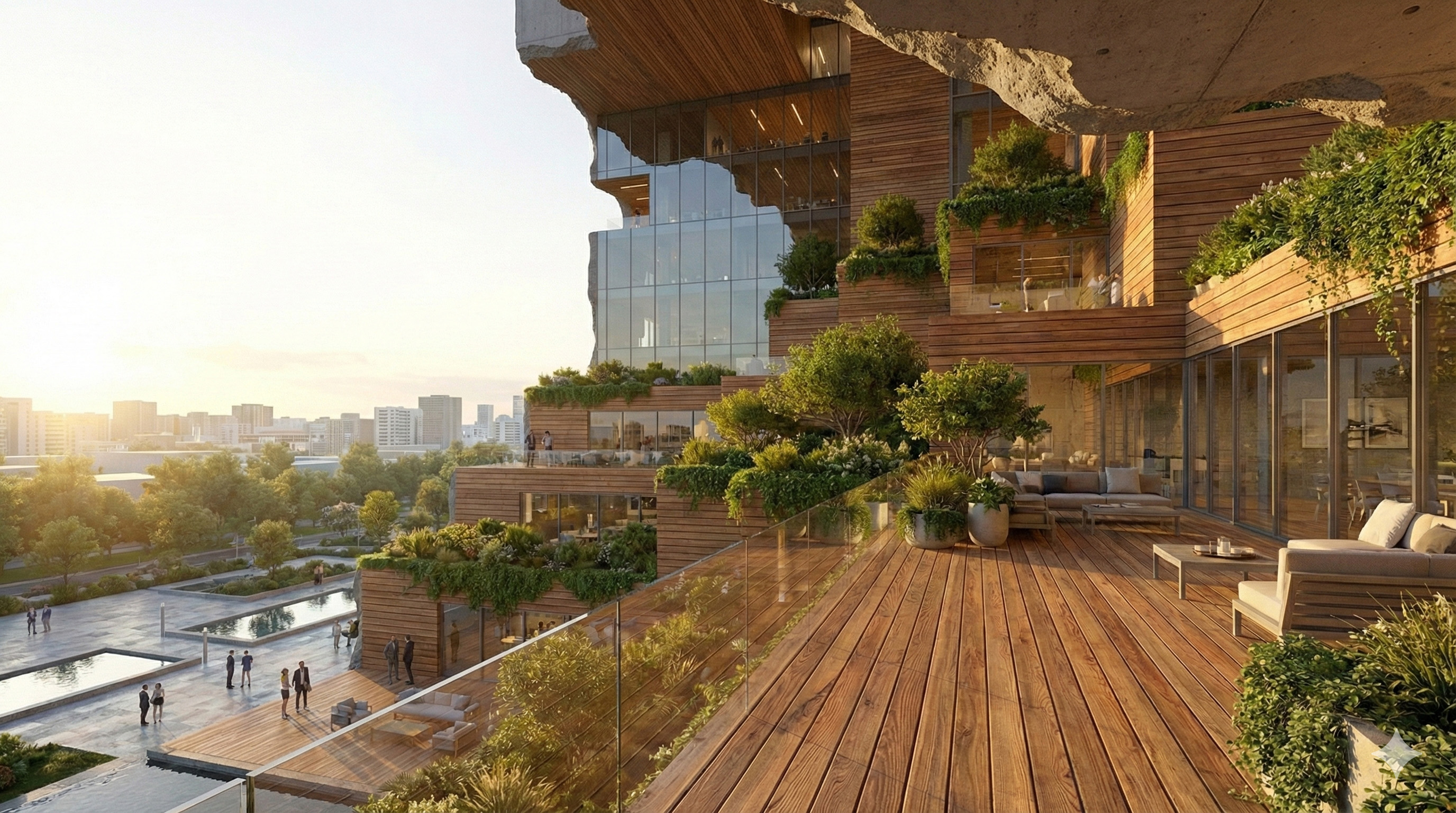
This “erosion” functions as a communal lung for the building. It creates shaded terraces, breakout spaces, and vertical parks that connect different floors. It proves that even in a massive tower, we can use code to carve out spaces that feel intimate and human.