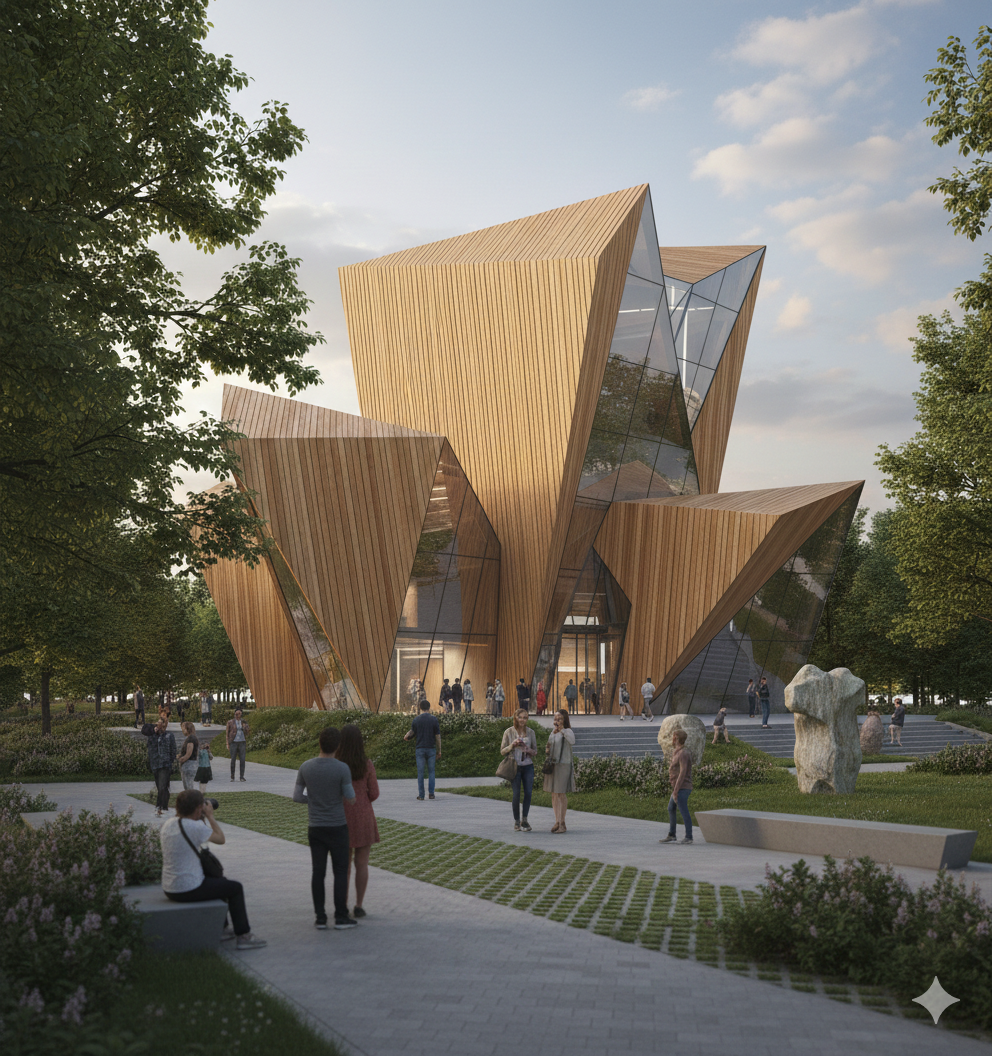
Shard Museum explores the aesthetic of fragmentation. Museums are often monolithic containers of history, but this project envisions a building that looks like history exploding outward. The form is composed of aggressive, jutting shards that pierce the sky, creating a dynamic silhouette that changes from every angle.
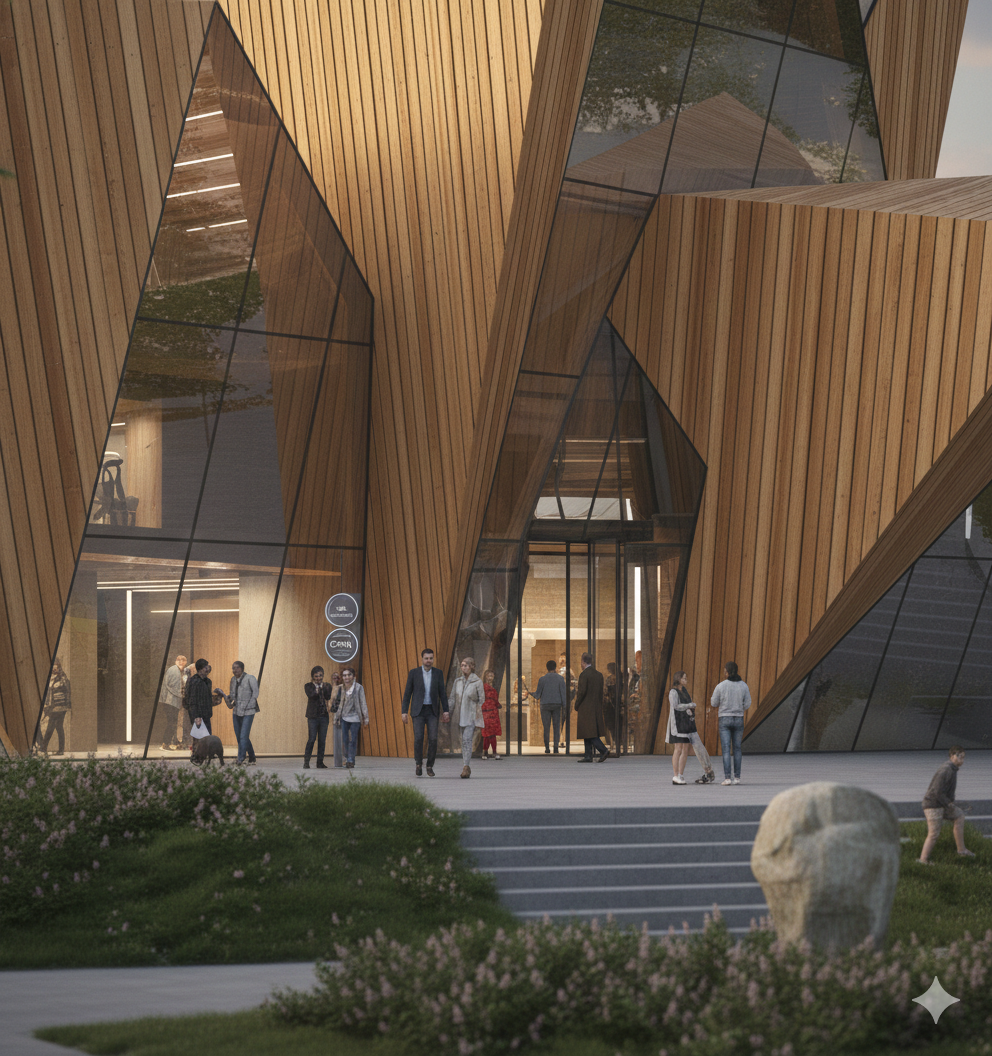
However, to prevent the building from feeling hostile, the sharp geometry is wrapped in warm, vertical timber slats. It is a “soft explosion”—a balance between digital precision and natural materiality.
The Logic: Procedural Prisms
The geometry was generated using a custom function in Julia called bikin prisma tajam (create sharp prism).
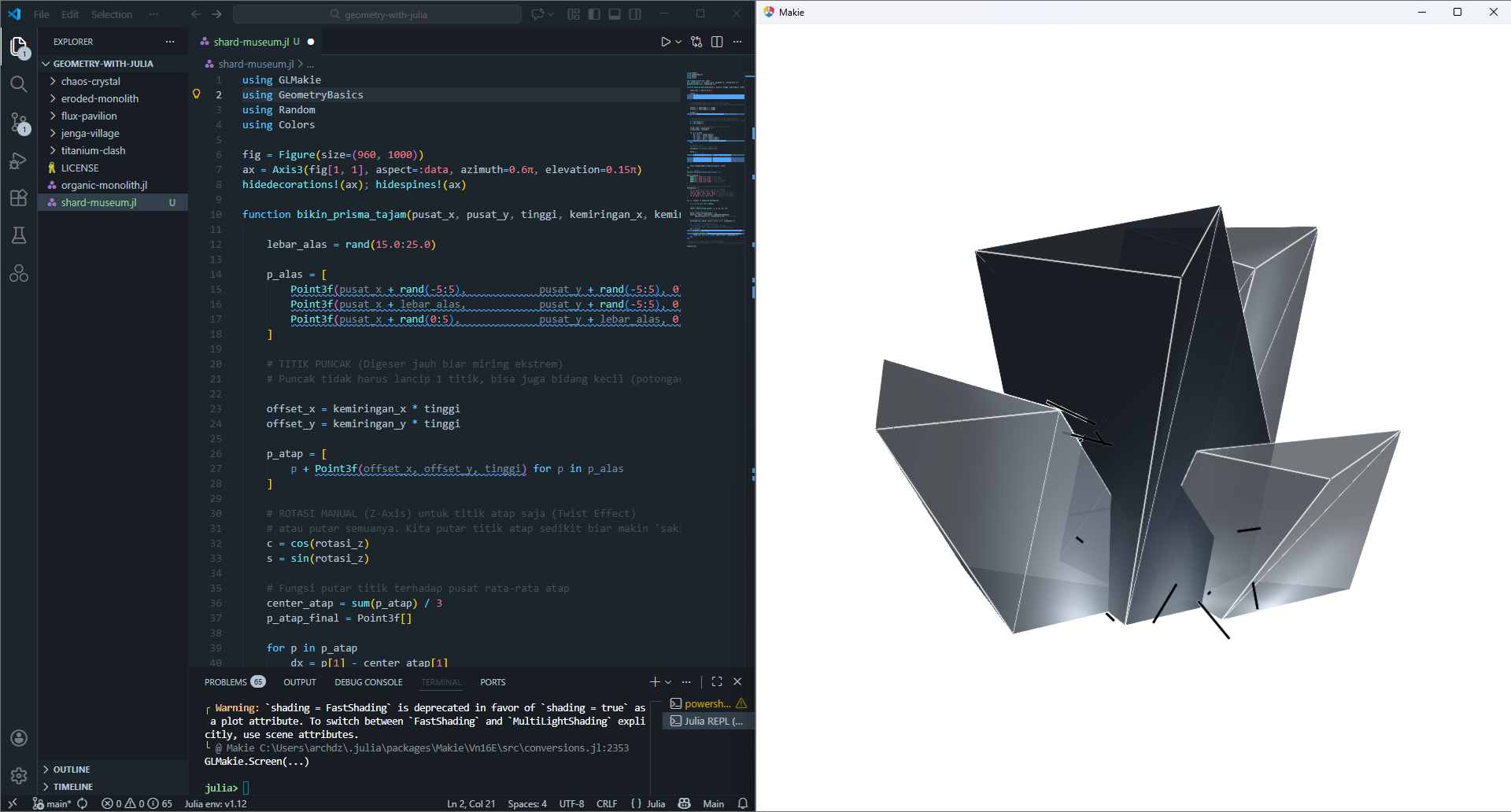
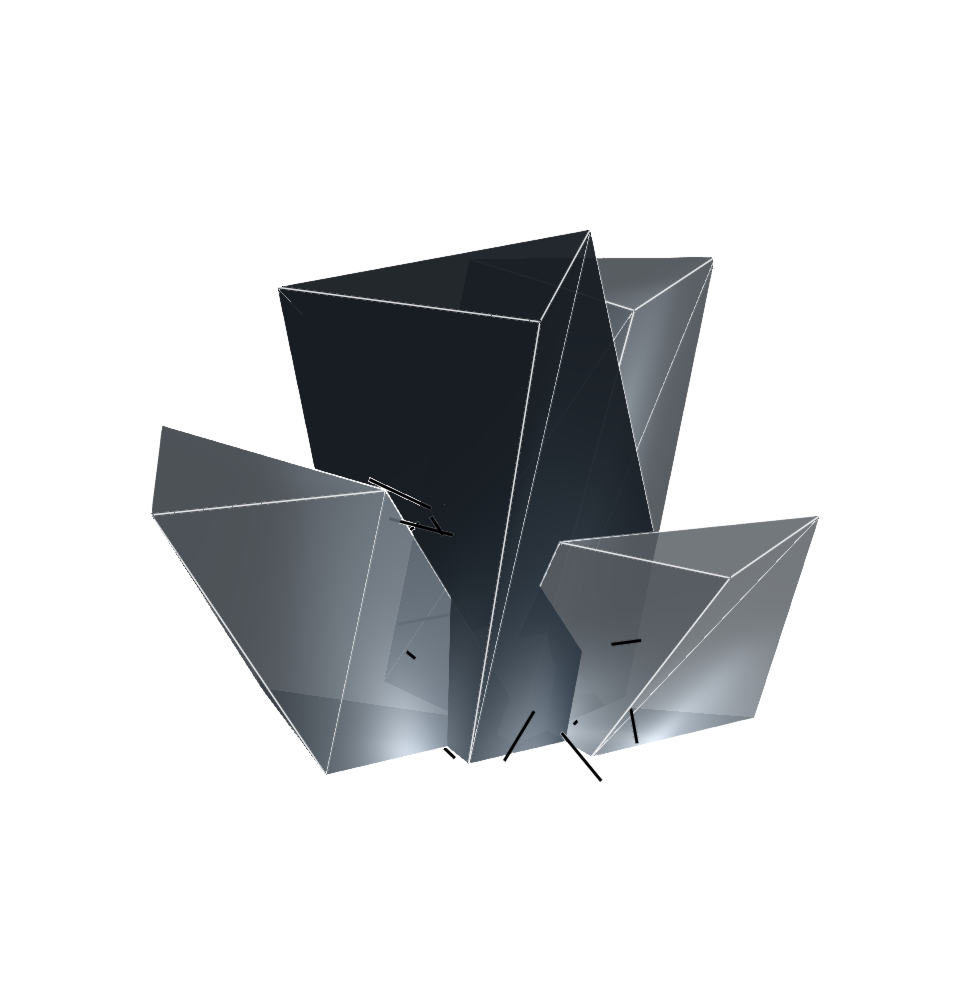
As seen in the computational study above, the script does not model a single building. Instead, it generates a cluster of prisms. The code randomizes the lebar_alas (base width) and the offset of the roof vertices to create extreme tilts. The challenge was to create a cluster that felt chaotic yet cohesive—like a crystal formation growing out of the ground.
Interior: The Cavern of Light
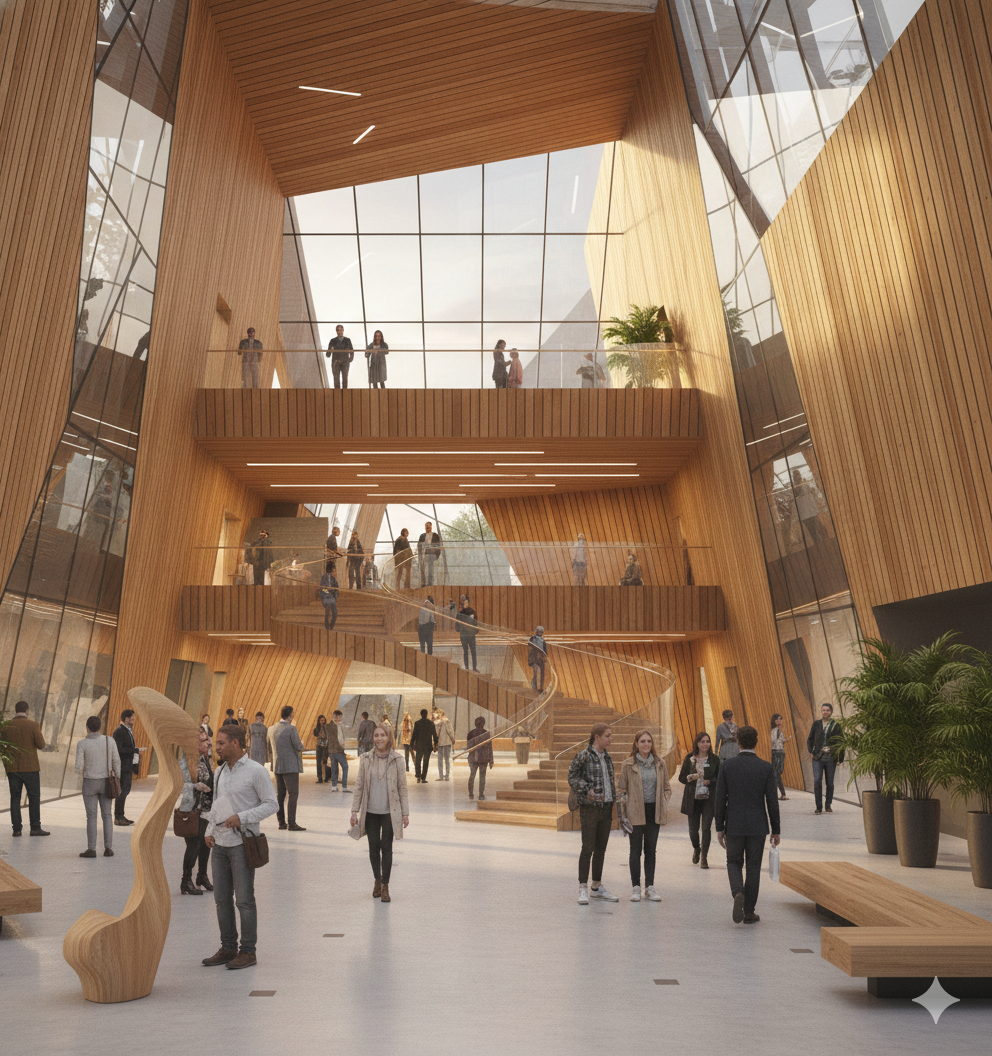
Inside, the aggression of the exterior shards translates into a dramatic, cathedral-like atrium. The angled walls create unexpected intersecting planes, while the large glass facets allow natural light to slice through the space.
Rendered in Nano Banana, the interior continues the timber theme, creating a warm, acoustic environment suitable for a cultural space. The grand spiral staircase acts as the organic counterpoint to the rigid, angular shell, guiding visitors through the “splinters” of the museum.